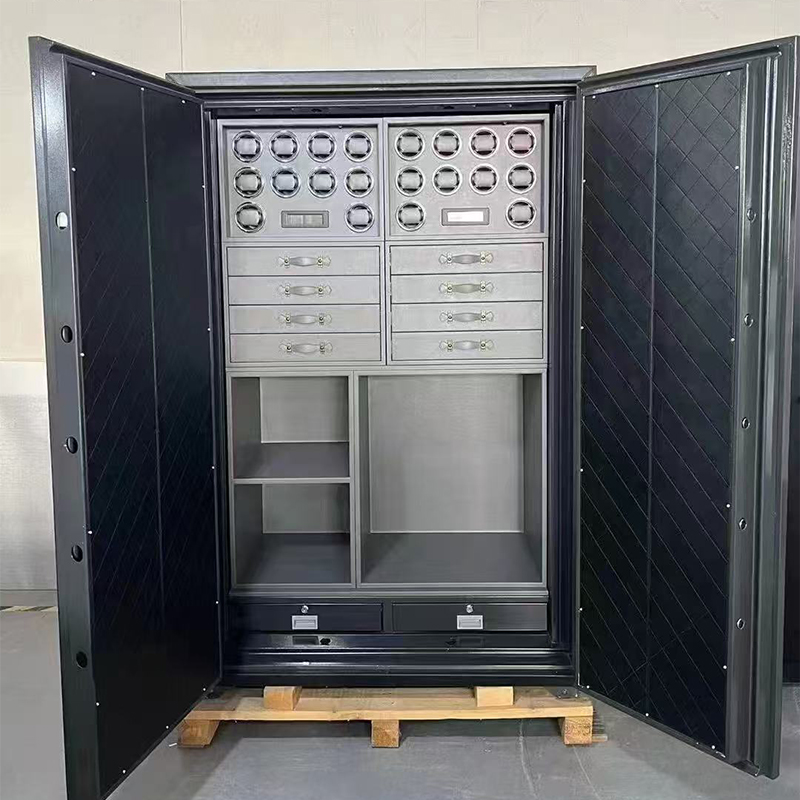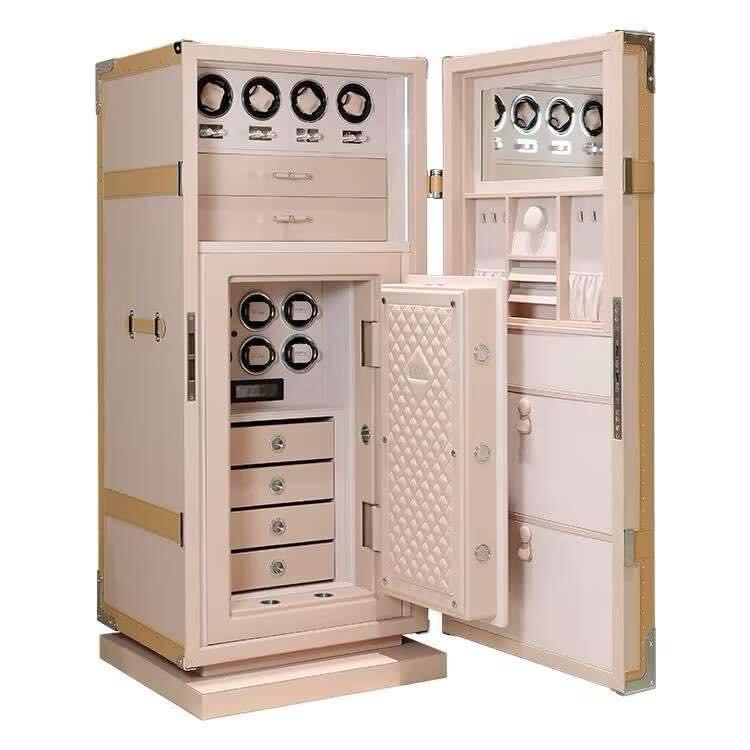
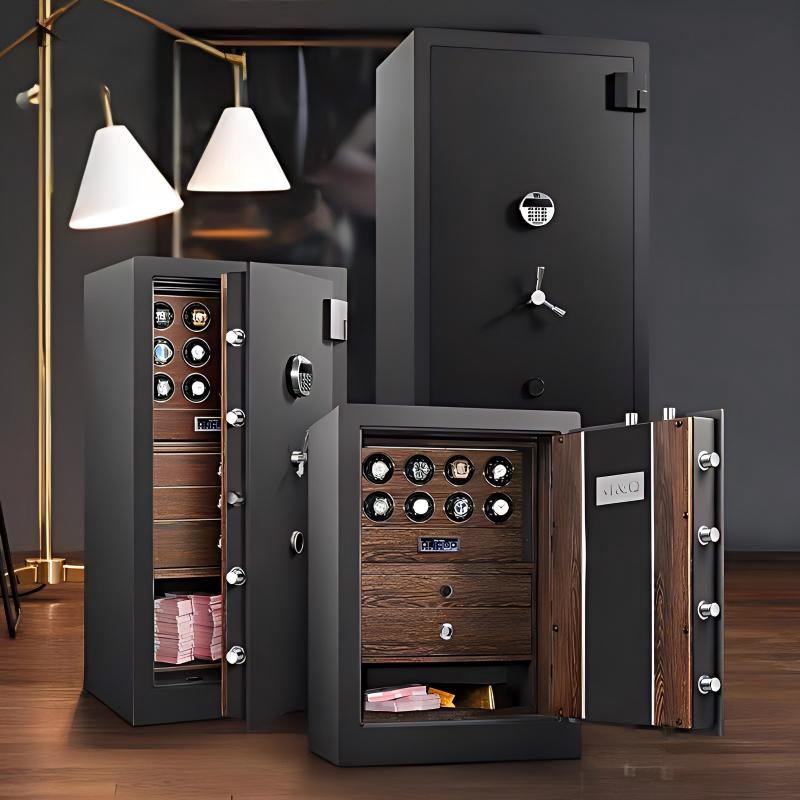
The question comes up regularly among collectors who are assembling their first serious collection: do I need a watch winder, or will a quality watch box suffice? The answer depends almost entirely on what you are storing and how you intend to manage the watches in it.
Both products serve the purpose of housing watches. Beyond that, they differ in almost every meaningful respect — mechanically, functionally, and in terms of what they can and cannot protect against.
The Fundamental Distinction
A watch box is a storage vessel. Its purpose is to hold watches securely, protect them from dust and incidental damage, and present them attractively. It does nothing else.
A watch winder is a mechanical device that both stores and actively maintains automatic watches by continuously rotating them through a defined winding cycle. It shares the storage and presentation functions of a watch box and adds a third: mechanical care.
"The difference between a watch box and a watch winder is the difference between a garage and a garage with a battery tender. Both store the vehicle. Only one keeps it ready to drive."
Side-by-Side Comparison
| Feature | Watch Box | Watch Winder |
|---|---|---|
| Dust & scratch protection | Yes | Yes |
| Display / presentation | Yes | Yes |
| Maintains power reserve | No | Yes |
| Lubricant circulation | No | Yes |
| Ready-to-wear convenience | No — requires resetting | Yes — always ready |
| Suitable for quartz watches | Yes | Partial — winding not required |
| Suitable for manual-wind watches | Yes | Partial — no automatic rotor |
| Security options | Limited | Lock, biometric, passcode |
| Power required | None | Yes — AC or battery |
| Travel portability | High | Moderate — travel models exist |
| Price range | Entry–premium | Mid–premium |
When a Watch Box Is the Right Choice
A watch box is the appropriate solution in several specific scenarios:
- Your collection consists primarily of quartz or manual-wind watches that do not benefit from automatic winding
- You are storing watches for the long term — archival storage rather than daily rotation
- You are travelling and need a compact, lightweight solution without power dependency
- You have a small collection (one or two watches) that you wear daily and which rarely run down
A well-made watch box — solid wood exterior, quality leather interior, secure hinges — is a worthy home for watches that do not require continuous winding.
When a Watch Winder Is the Right Choice
A watch winder becomes the appropriate solution when your collection includes automatic movements that you do not wear every day. The threshold is typically around three or more automatic watches in active rotation — at that point, the logistical case for a winder becomes compelling even before the mechanical benefits are considered.
- You own multiple automatic watches and rotate between them
- Your watches include complex complications (perpetual calendar, annual calendar, moon phase) that are tedious to reset
- You travel frequently and rely on your watches being accurate and wound upon return
- The value of your collection warrants the additional protection a quality winder provides
- You want to extend service intervals and reduce long-term maintenance costs
The Hybrid Collection
Many collectors maintain both. A watch winder for the automatic pieces in active rotation, and a watch box for quartz watches, manually-wound dress watches, or pieces kept in long-term storage that are worn only occasionally.
This is not redundancy — it is precision. Using the right tool for each function within your collection is the mark of a considered collector.
Choose a Watch Box if...
Simplicity & Portability
- Primarily quartz watches
- Small collection, worn daily
- Need for travel portability
- Long-term archival storage
- No power source available
Choose a Watch Winder if...
Care & Convenience
- Multiple automatics in rotation
- Complex complications present
- Wear varies day to day
- Collection value is significant
- Service cost reduction matters
A Note on Quality
In both categories, the difference between an entry-level product and a quality one is substantial — and in both cases, the penalty for purchasing inadequately is borne by the watches.
A watch box with poor interior lining will scratch cases. A watch winder with a vibrating motor will stress movement components. In either case, the nominal saving on the storage solution is negated by the cost of what it fails to protect.
The collection you have assembled — whether two watches or twenty — deserves a home that protects it with the same seriousness with which it was acquired.